Amber

World Storytelling Day

World Storytelling Day (March 20)

The art of oral storytelling.

We imagine ourselves, we create ourselves, we touch ourselves into being with words, words that are important to us.

Gerald Vizenor

* Scott C. Jon, and Raymond E. Jones, editors. “Preface.” The Harbrace Anthology of Poetry. 5th ed., Nelson College, 2006.

Throughout history, storytelling has long been a method of entertainment, education, and sharing of culture.

Through storytelling, the speaker can instill lessons about history, customs, values, facts of life, and cultural beliefs. Spanning generations, the oral traditions of Native cultures brought together communities through shared secular stories, legends, cultural histories, and myths. Storytellers manipulate the malleable structure of storytelling to interweave personal life lessons, humorous experiences, or cultural morals to connect with others.

Storytelling fosters culture and community; allows connection and relationships with others. The congregation of individuals during storytelling rituals bond people through the shared experience of listening to the telling of the story. The listeners actively hear, interpret, and identify with the story as a collective unit. This is similar to the magic of theatre: meaning and emphasis are created when the audience (listeners) interact (identify) with the play (story). There is value and intensity in experiencing – conceptualizing – art together.

Storytelling is an important cultural action. Strong relationships, cultivated from shared experiences, lessons, and history, form the pillars of recognizable culture. Undeniably, the art of storytelling, found in many oral traditions of Native and Indigenous cultures, has bound communities together and continues to support a shared cultural history.

In European history, oral storytelling is often found in folklore and fairy tales. Folk narratives developed at a time when most peoples couldn’t read. Stories and moral tales were passed along by word-of-mouth and often changed by the speaker. The speaker would add emphasis where they pleased (perhaps they changed details because they forgot exactly how they heard it the first time) or the speaker may add constructive elements such as social criticisms, religious lessons, or the hardening of gender norms.

The malleable design of oral storytelling and its ability to travel great distances is one reason why similar oral stories can be found in many different cultures. Consider, for example,
Yeh-Hsien, the Chinese Cinderella story (often cited as the oldest Cinderella story).

Vetalapañcavimsati, a Tibetan Cinderella-like tale.

And “The Little Glass Slipper” recorded by Charles Perrault.

I encourage you to research oral storytelling; whether you’re led into learning about parietal art and art history, indigenous cultures, moral tales, poetry styles, or something else, you’ll be sure to learn something you likely have never considered before.

“Throughout our lives, we seek to understand ourselves, our emotions, our experiences, and our relationships with others. We also attempt to define our connections to larger social and cultural institutions. One way that we can do that is through literature, for works of literature are the records of individual responses to the world in which we live.”

* Scott C. Jon, and Raymond E. Jones, editors. “General Introduction.” The Harbrace Anthology of Poetry. 5th ed., Nelson College, 2006.
All You Otter Love about Illustrations

Hello readers,

This piece is less of a book recommendation and more of a place recommendation.

If you ever have the opportunity to pass through southern British Columbia during your travels, I must recommend you pit-stop at Otter Books.

You can find them on Baker Street (how perfect!) in Nelson, B.C.

What I love about Otter Books is its atmosphere. The small shop is what you imagine in your mind’s eye when you consider a traditional bookstore. Large, corporate bookstores can be great for finding multiple copies of what’s in-trend; still, the large open-floor plans with their designer trinkets, overpriced scarves, and plethora of monogrammed mugs get tiresome, fast.

Otter Books is a cozy, squishy shop that smells of paper and wood. It is a comfortable place that invites you to take your time. The shop is a little run down, which only adds to its charm and authority. Otter Books is truly a testament to its community, with friendly staff, a spotlight on local authors, and a focus on British Columbia’s natural beauty.

Okay, this is where the book-recommendation-part comes in.

Otter Books is one of the few shops I’ve had the pleasure of visiting that carries a selection of stories specifically dedicated to the beauty of books and the splendour of the natural world. …That’s a little wordy, but just look at some of these texts:

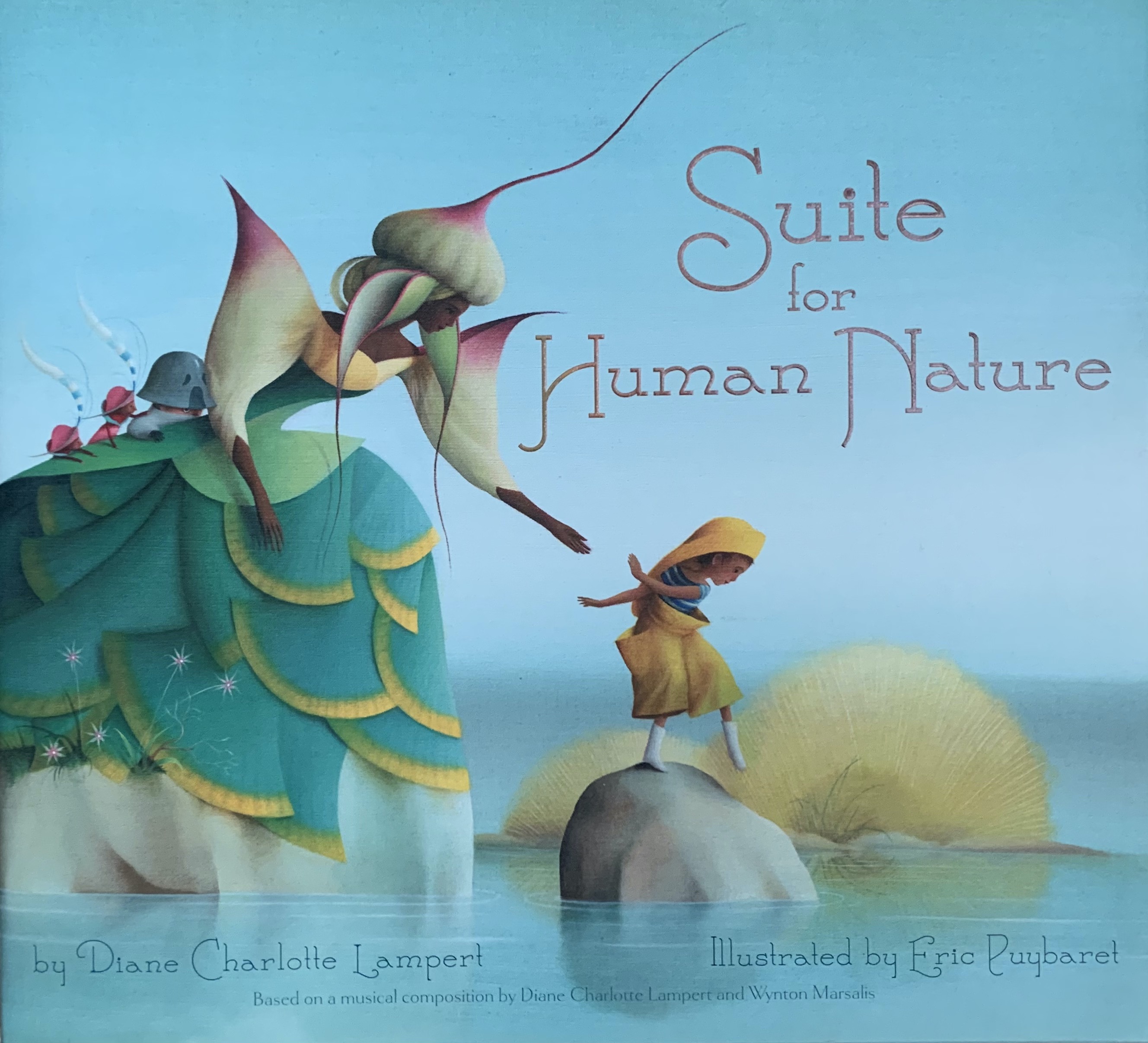
Suite for Human Nature
by Diane Charlotte Lampert
illustrated by Eric Puybaret
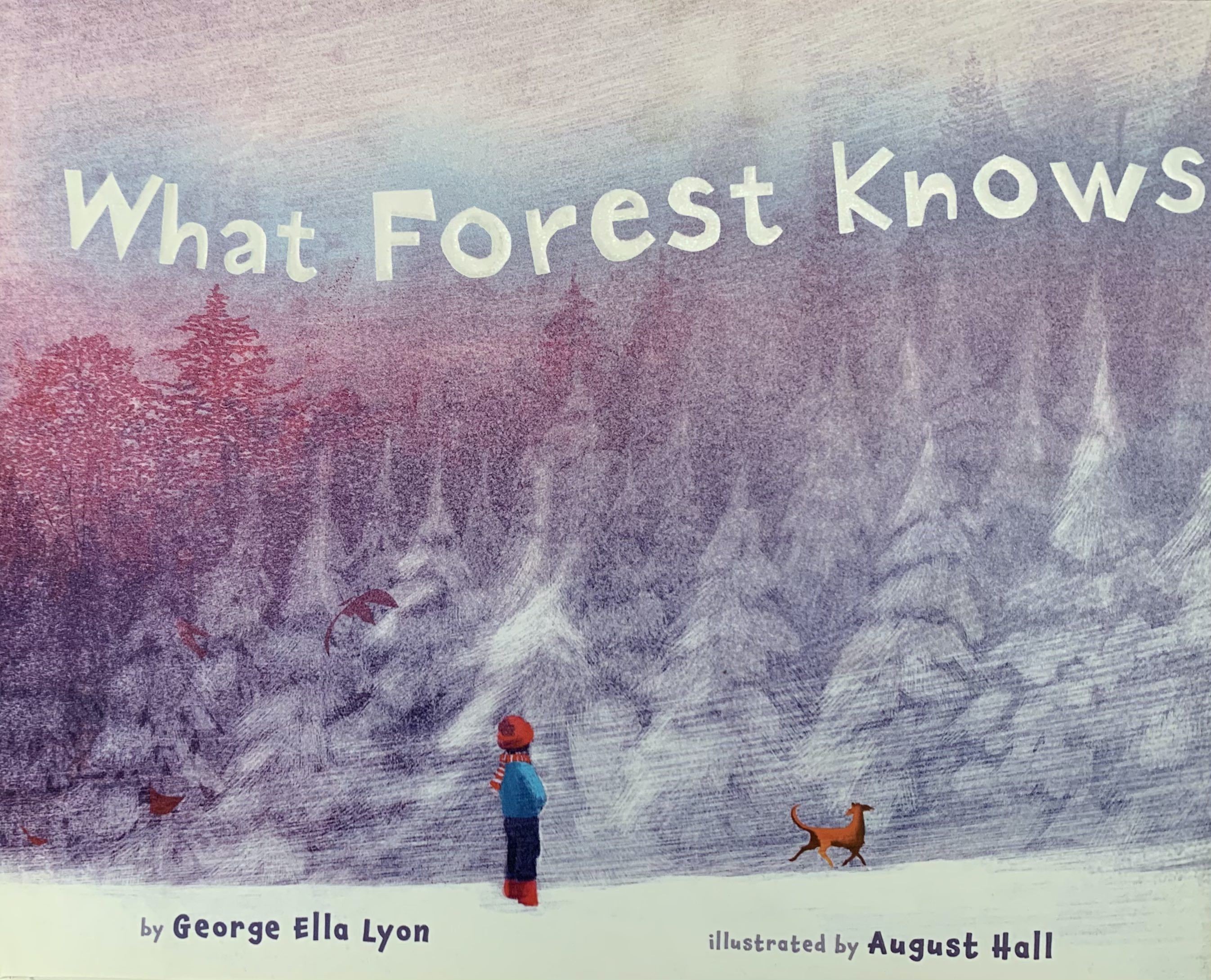
What Forest Knows
by George Ella Lyon
illustrated by August Hall
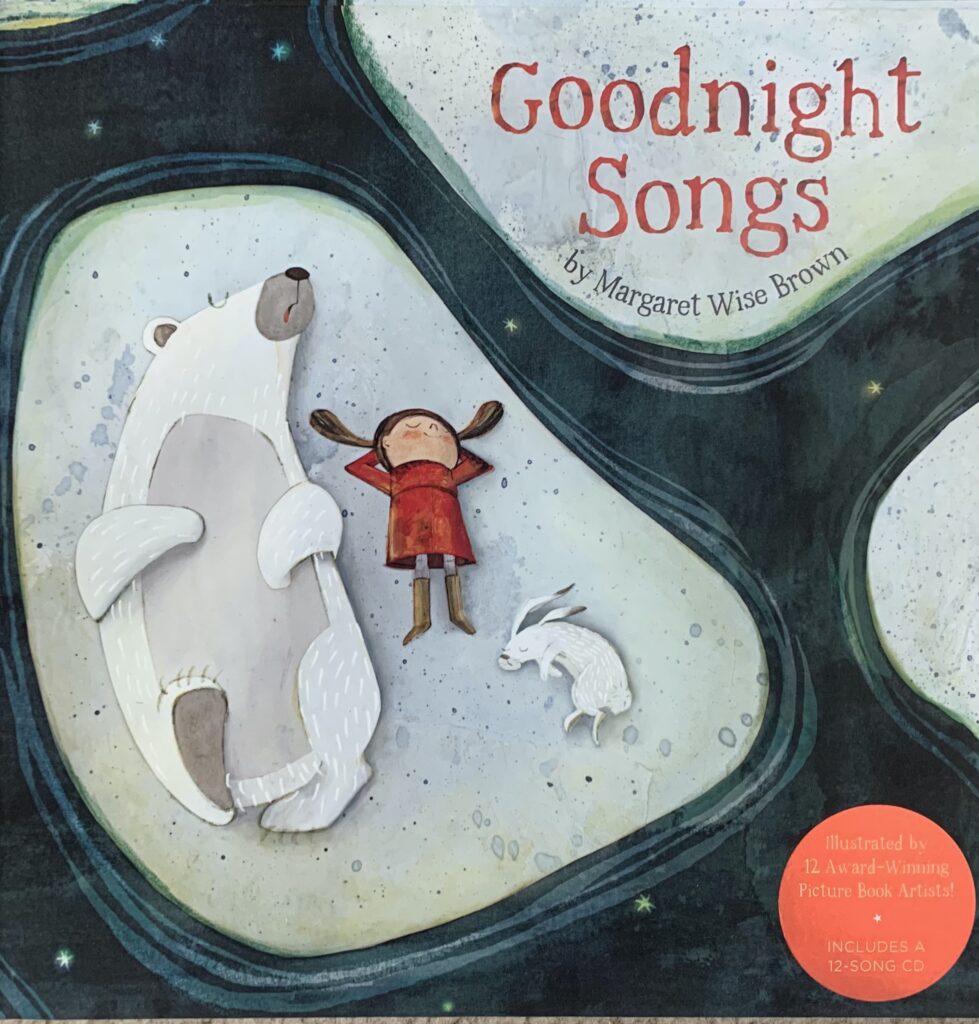
Goodnight Songs
by Margaret Wise Brown
Illustrated by Twelve Award-Winning Picture Book Artists

While each is very different in content, these books exhibit processes of the natural world and are full of rich, stunning, full-page illustrations. I make a point of supporting Otter Books whenever I pass through the city (however sporadically that may be), and I always have difficultly deciding which beautiful book to take home!

I’ve had some suggest that Otter’s type and selection of illustrated books seem plentiful just due to the store’s size: being a smaller shop, it’s just easier to find these types of visual media because there is less to sort through. This point, I would argue, makes Otter Books even more appealing!

In any case, I highly recommended checking out the texts above or similar illustrative books which depict the beauty of the natural world. While an illustrated book’s images need to complement the text, the illustrations in these books almost stand-alone, telling a visual story without the need for words. (A true picture-book doesn’t require text.)

Visual storytelling involves the use of graphics, images, pictures, and videos to engage with viewers in an effort to drive emotions, engage intercommunication, and motivate an audience to action.”

Goodstadt, Eric, & Reeb, Sacha. (2019). Five Very Different Examples of Stellar Visual Storytelling and Why They Are a Step Above the Marketplace. Content Marketing World 2019 Conference & Expo. https://cmworld19.videoshowcase.net/

“The key to a successful wordless picture book is the storytelling quality of its illustrations” (92).

In the illustration, the viewer “looks for rhythm and movement in the pictures, as well as tension in the book’s layout, to add interest” (123). The “hybrid” of text and visual imagery “can be an effective means of encouraging reading in a society that at times seems besotted by electric imagery. The field of picture-book art is dynamic” (123).

Russel, David. Literature for Children: A Short Introduction. 8th ed.,Pearson, 2014.

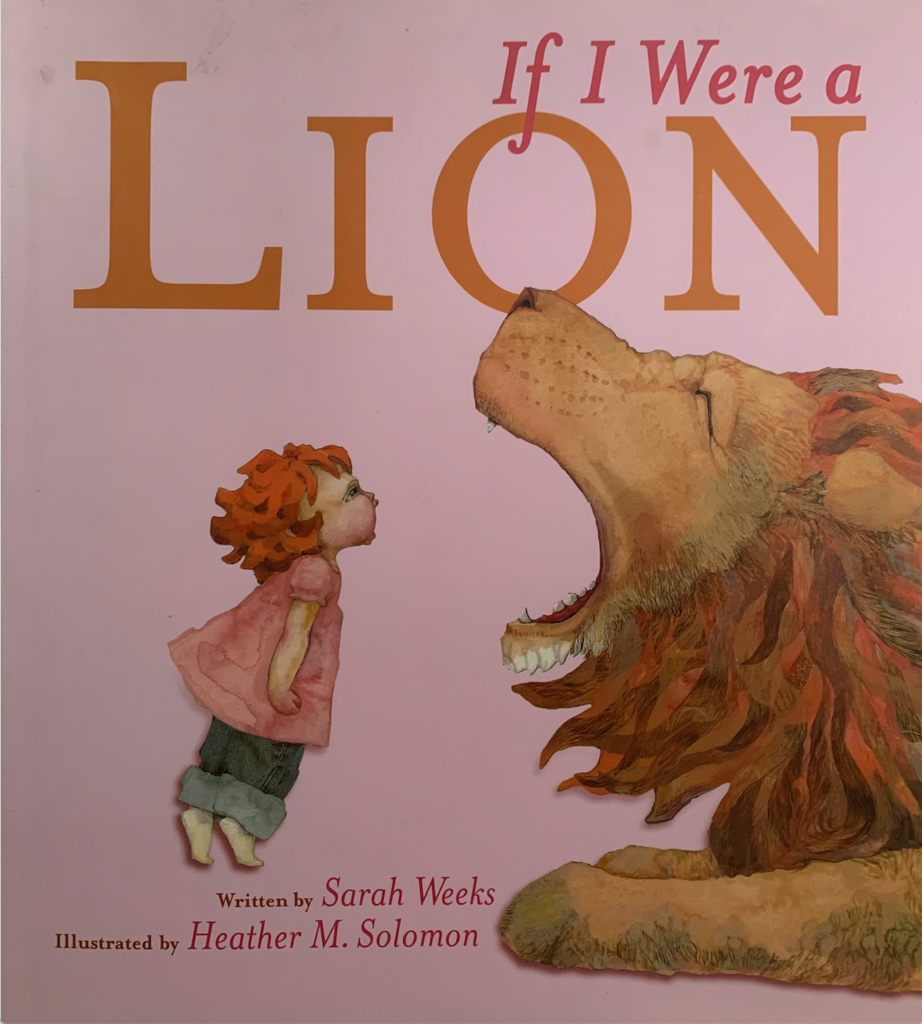
If I Were a Lion

    If I Were a Lion – Sarah Weeks

    If I Were a Lion is one of our favourite illustrated story books.

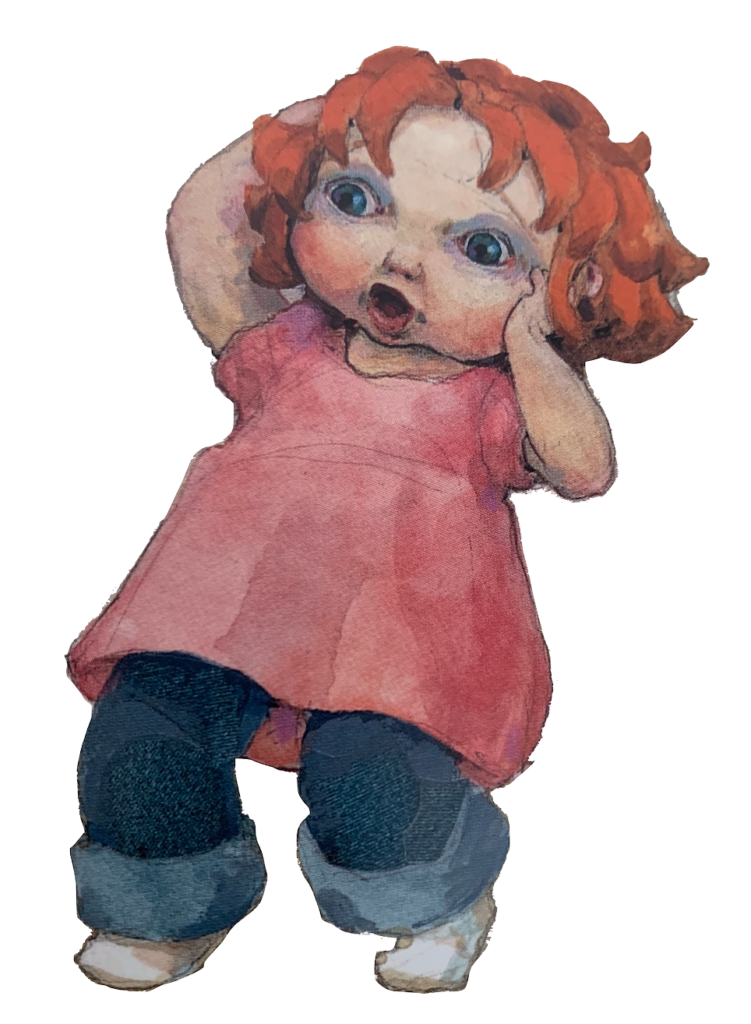
    This story follows a little girl who has been put into time-out for her unruly and “wild” behaviour.

    While in time-out, she thinks about what it means to be wild and, in contrast, what it means to behave.

    Solomon’s illustrations are imaginative and expressive: the images’ textures and colours work wonderfully to draw in the eye. Solomon also alternates between full-page and single-item illustrations, which complement the text’s context, in which the image references.

    The text, written by Sarah Weeks, is wonderfully rhythmic and bouncy. The reader easily falls into the poetics of the book. The text’s pace is easy to follow while reading aloud, making it easy to add emphasis, flow, or funny voices!

    If I Were a Lion is that much more charming for the animal lover: the illustrations contain a variety of animals (some to play hide-and-seek with), and the lyrical text encourages the reader to make up their own verse.

    If I were a fox,

    I would dig and run.

    I’d not care about cleaning,
    only fun.

    I’d pounce, and I’d sneak,

    And take naps in the sun.

    If I Were a Lion – Heather M. Solomon

    If I Were a Lion

    Written by Sarah Weeks

    Illustrated by Heather M. Solomon

    Certain Truths

    Hello all,

    I’ve been thinking of Virginia Woolf’s essay “A Room of One’s Own” lately. (If you haven’t read the essay, I highly recommend it.) To badly surmise, Woolf stipulates that writers, especially mothers, require a room dedicated to one’s mental, creative employment. Be it an office, a library, or a den, this space of “One’s Own” is designed to be an uninterrupted place of work and creativity.

    Woolf recognized that women who were discouraged from pursuing academics and writing, and mothers who were naturally burdened with the full weight of child-rearing per social and gender norms, often lacked the time and accessibility of a quiet space that nurtured their creativity.

    Now, I reckon, in the age of COVID where more – men and women, mothers and fathers – are working from home, there is a larger population of people who can attest to the difficulty of working with focus while their family is around and about.

    I don’t mean to suggest that our family intentionally gets in the way of our work. But the shortest request for a snack or a quick peek to look at a drawing is equally as disruptive to one’s train of thought as an unexpected phone call or poorly timed temper tantrum.

    Still, I’ve been wearing many hats as of late and have found it challenging to keep up with my creative writing. “Productivity” is heavy with context; I’ll go as far as to say I enjoy being productive. It is satisfying to finish projects, try new exercises, and be asked to attempt new occupations. Even so, I find myself falling behind in my passions.

    In these times, I believe there is comfort to be found in certain truths:

    • If you write, you are a writer.
      You are a writer.
    • You don’t always have to write well. Writing is an art: it changes, develops, grows, and sometimes it just sucks.  
      It just sucks.
    • Sometimes, writing is hard for everyone. Life is busy and full of distractions. Be kind to yourself.
      BE KIND.
    • Like all skills, you have to practice. You’ll get better – you will.
      Pratice, pratice, pratice.

    Good Luck.

    And Happy Writing.

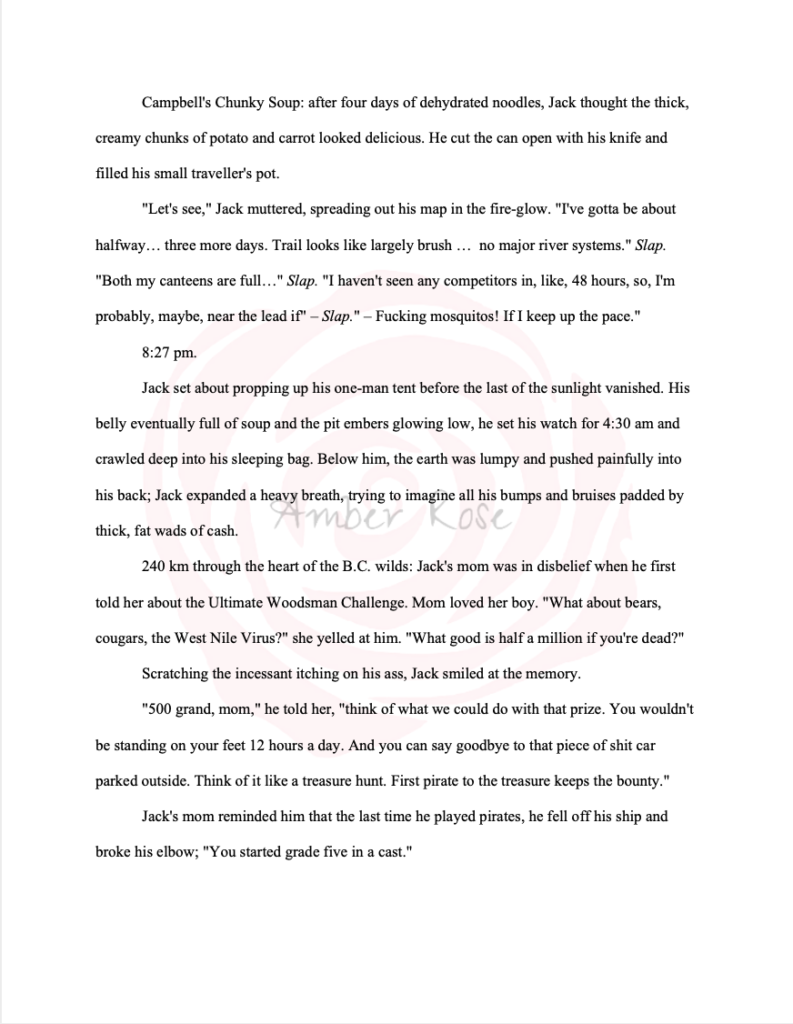
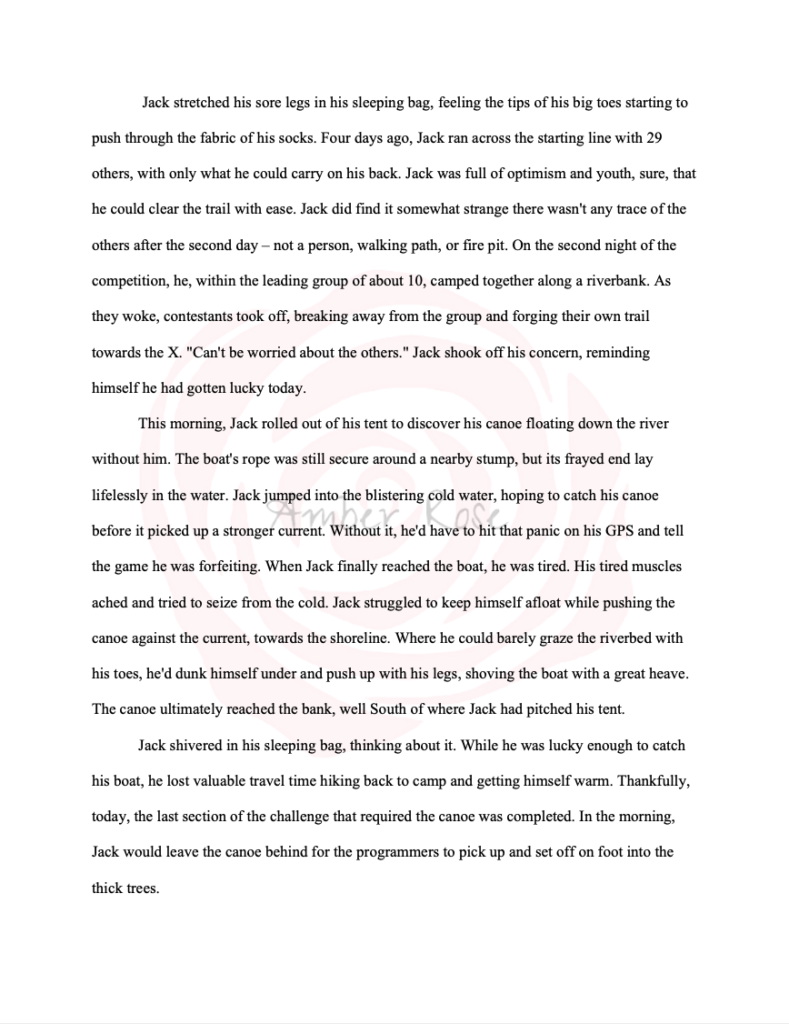
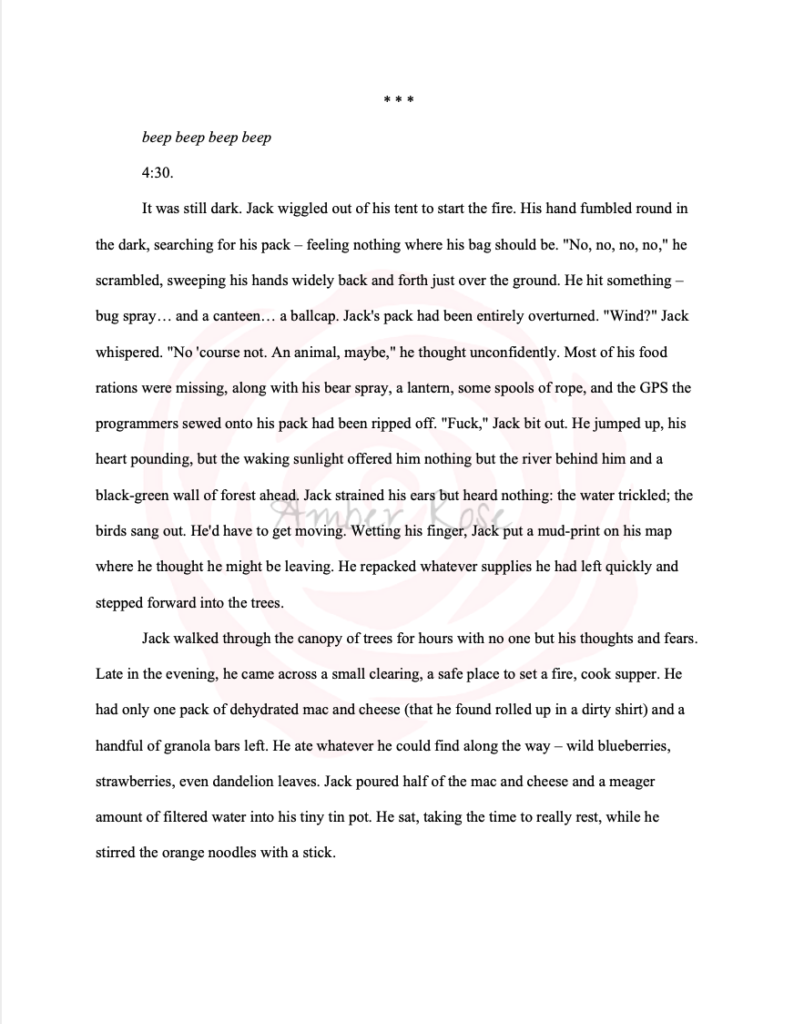
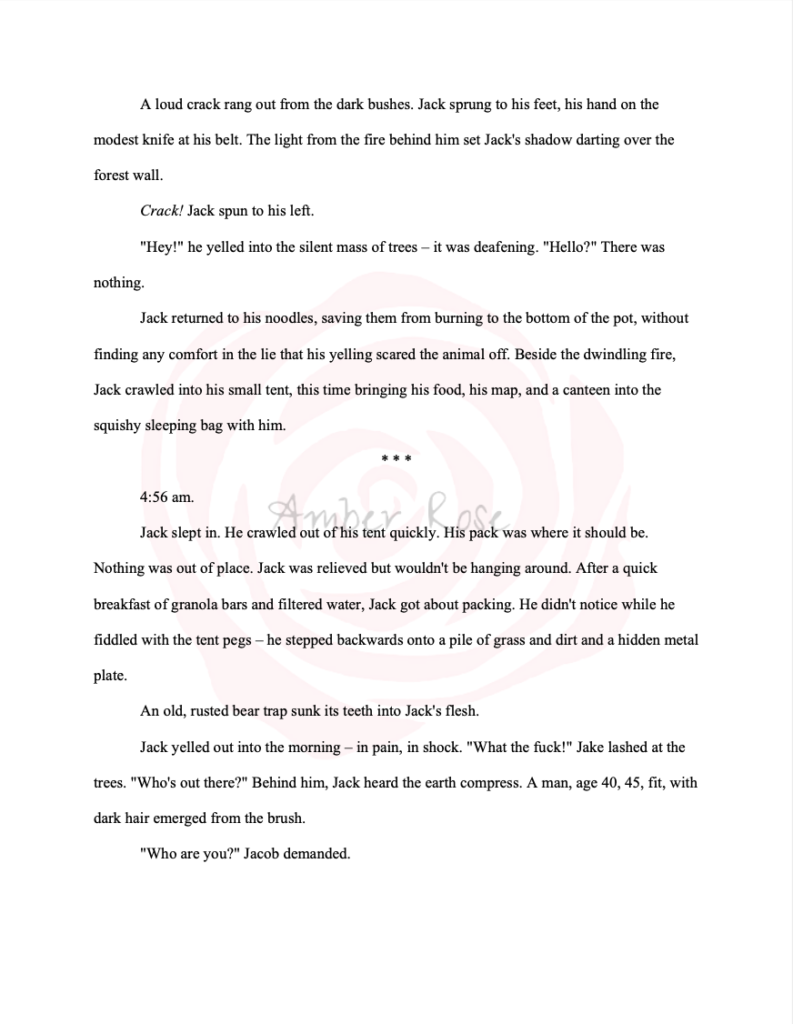
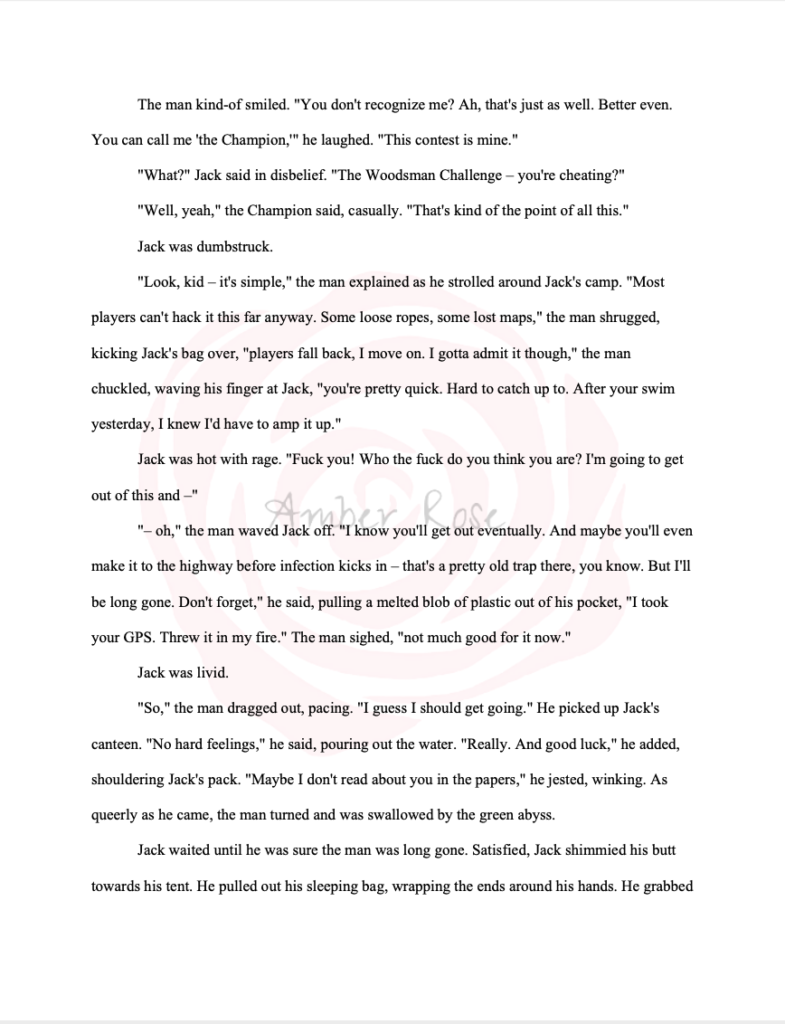
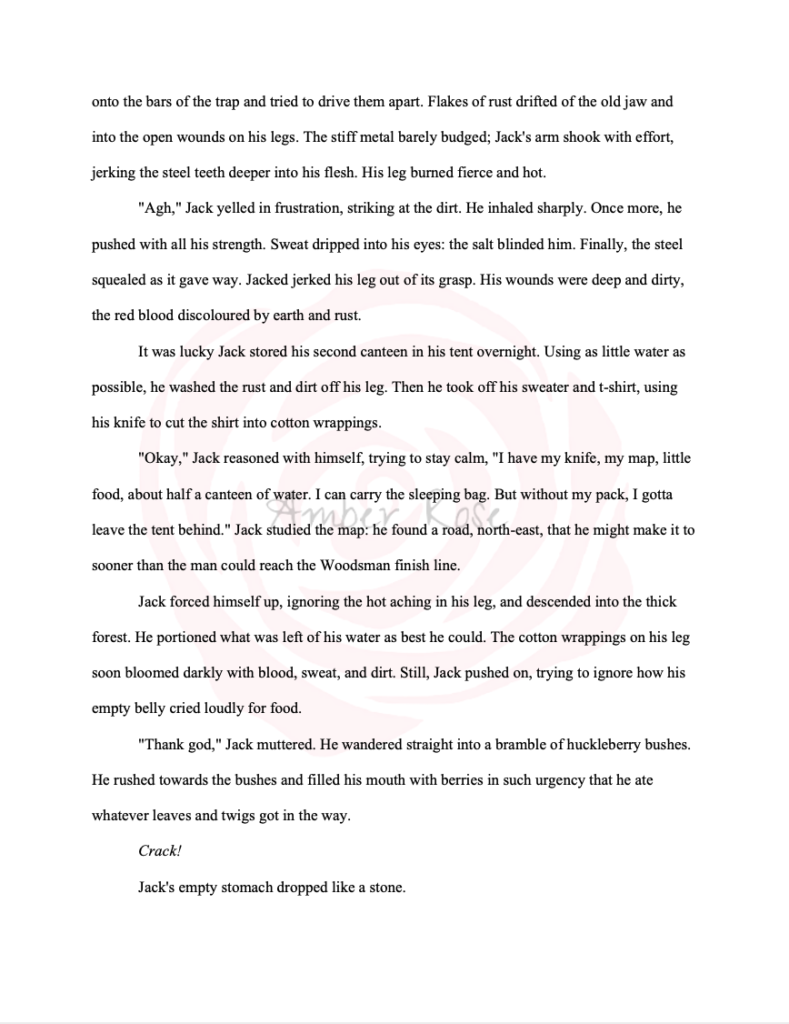
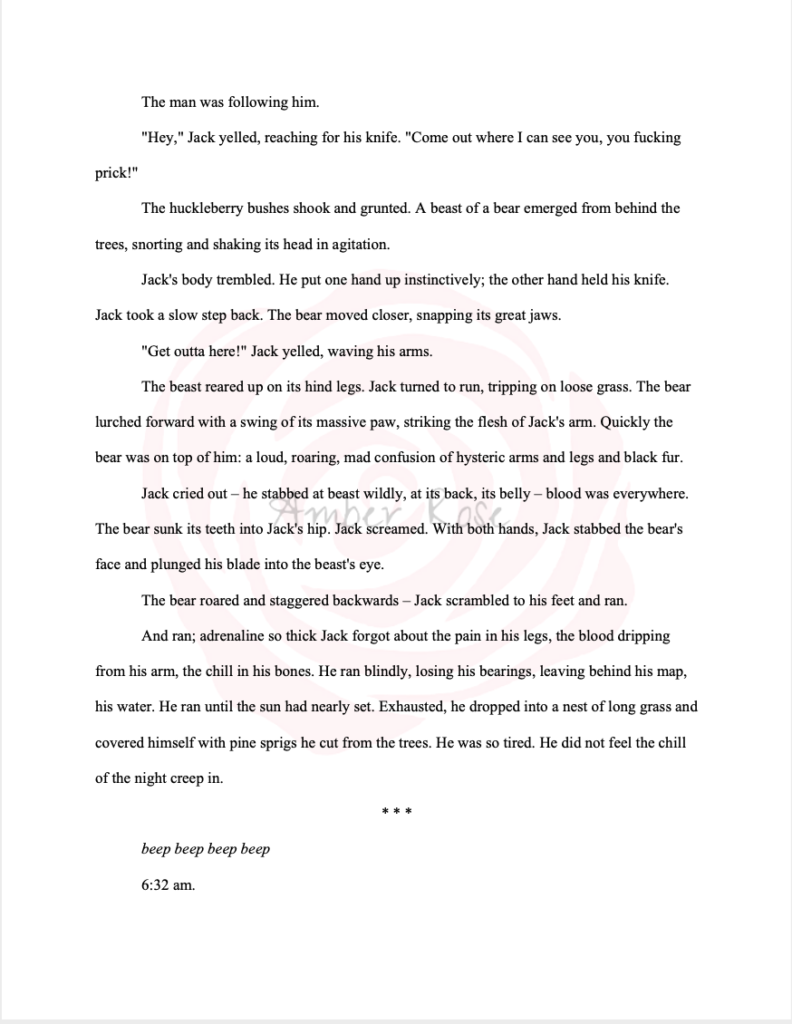
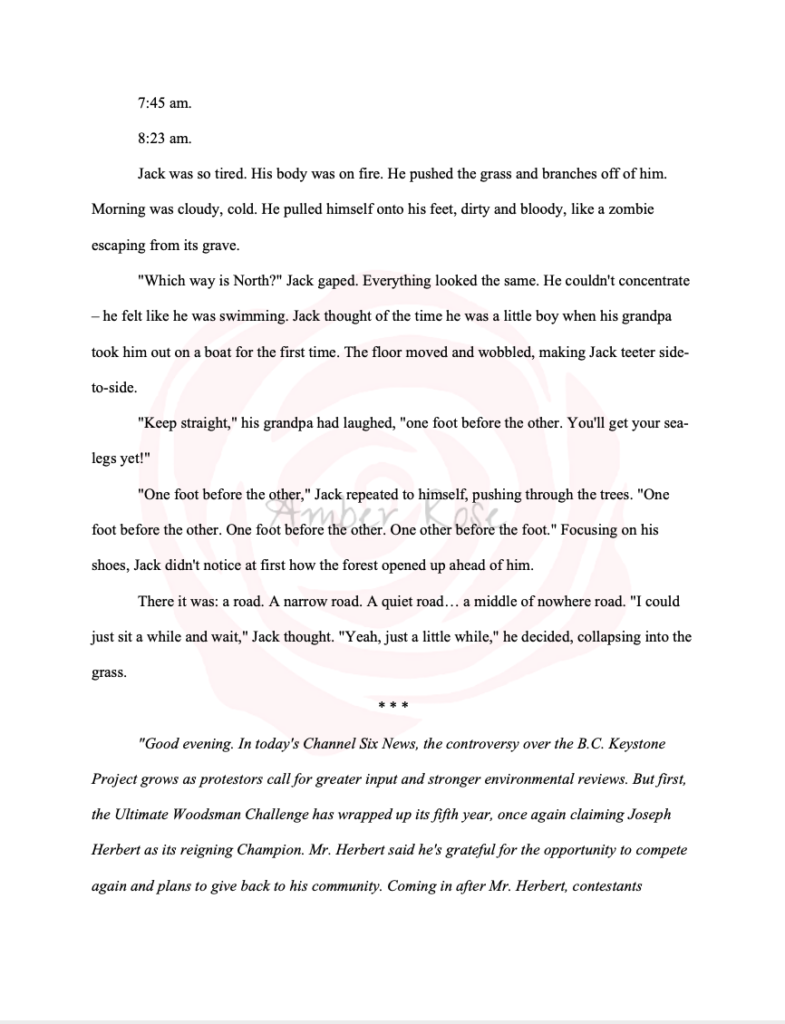
    The Ultimate Woodsman

    Hello everyone!

    I would like to share another timed, word-count limited, contest piece I recently wrote. Per the contest rules, writers find out their story’s assigned genre, a main character, and an item that the writer must write about at the beginning of the count-down.

    Admittedly, these contests do not always push you to produce your best stories. However, you are forced to think and write creatively, which I believe makes you a better writer in the long haul. Besides – it’s fun!

    When I first read my assigned genre, “action-adventure,” I was very nervous! Fast-paced action is not my usual writing style. My first draft of the story ended up being adventurous enough, but it lacked the pace and urgency of what you usually find in action genres. If I had to classify it, I would say it was more of a mystery-adventure. With only a handful of hours left before the deadline, I did my best to increase the story’s sense of crisis and haste.

    After the writer’s story is submitted to the contest, the writers are free to continue editing, developing, or changing their story as they see fit. However, I like to share my contest-pieces as-is. I find it interesting to see what has developed in the short time frame, without the benefit of time: being able to step away, clear your head, and edit/proofread with fresh eyes and perspective.

    With all that said, be kind, and enjoy!

    The Ultimate Woodsman

    *Recommendations*

    We are a family of readers!

    I am often asked what books I’ve enjoyed or would recommend to others.

    I have compiled a collection of our favourite stories, novels, comics, and more.

    This list is always growing!

    Feel free to browse this section of the website!

    You can surf Wild Rose’s Recommendations
    using Search and the Site Map navigation found in the menu.

    Or,

    Click below on the section you would like to explore!

    The Novel

    There is a special place in my heart for the novel.

    Much of my life was influenced by reading. As a child, I would often find an obscure hiding spot in my home where I would sit and read a good book.

    My elementary school’s librarian (Mrs. Z) was an eccentric older woman with long, wild grey hair and small rectangular glasses, who believed in carrying a variety of books for young readers – especially the criticized and controversial, as long as the school would allow. When the principal called for the removal of a particularly gory sci-fi series, Mrs. Z sneakily allowed me to check out the remainder of the books from behind the counter. I had already read the first few books, after all.

    (Reader, I wish I could remember the name of this series! If I do at some point, I will update this post.)

    Our small town’s local library was located in our community center. After an evening of tap and jazz dance class, I would stop at the library and see what was new in stock. I once checked out a book where the protagonist assigned animal personas to the people in her life, that were dependent on their style or personality. I saw my dance teacher as a monkey; my dad was a grizzly bear.

    To pass the time, I would try to recreate my favourite book covers with pencil-crayons and paints.

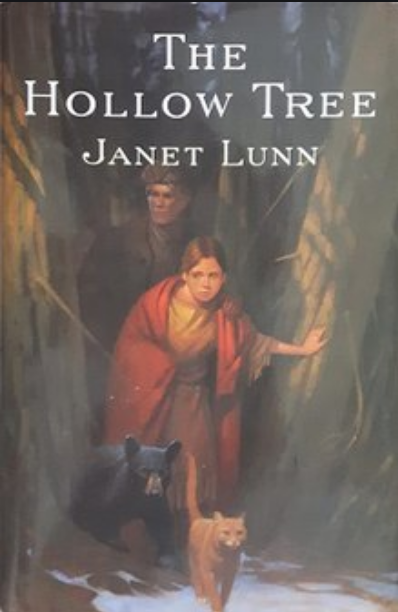
    The Hollow Tree was a favourite of mine in grade five – my teacher challenged me to draw the cover as book mark.

    Book cover of The Hollow Tree,
    written by Janet Lunn.

    To be sure, the novel is a special kind of art. What I love about novels (fiction, in particular) is their vitality. The novel is a package of life itself that contains bits of the world and the collective human experience, but which only comes alive in the reader’s hands.

    .

    In its bones – character, setting, plot – the novel embodies the collective human experience. A believable story, even one made from dragons and fairies, contains elements of shared human truth. Regardless of our different walks of life, we all recognize laughter, friendship, terror, cleverness, betrayal… To read a book is to consume elements of our shared ancestral experiences of what it means to be human. The writer creates the overall story from these experiences.

    In doing so, the writer gives pieces of themselves to the narrative. Each piece of writing contains truths from the author’s life. It may be that the pasture which the damsel runs through while escaping thieving bandits is the very same pasture that the author once picked dandelion heads.

    Or, the fighting government parties that are creating social tension and whispers of civil war are the same politicians from the author’s home country.

    Maybe, the protagonist’s deep and unforgiving grief they find themselves drowning in after their spouse’s death is the same grief the author swam through after the death of their mother.

    Of course, the details will change, but the writer’s experiences will always find themselves immortalized in the novel.

    Yet, what I find so fantastic about the novel is how it comes to life only in the reader’s hands. On its own, the novel is just a collection of words, a stack of paper collecting dust on a forgotten shelf. But, in the hands of a reader, the novel springs to life. In this sense, I often refer to the novel as a spell and the reader as a spell weaver. To be sure, I am not the first to feel this way.

    Novels are truly an art of magic. They exist as a world in and of themselves: a world within a world. They contain the collective human experience and immortalize facets of its writer.

    The best novels invite you to become lost within them, fall in love with their characters, and identify with their settings. They will stick with you long after you have turned the final page.

    For the Love of Comics

    Alternatively, the mechanics of comics.

    Comic books are truly a hybridization of pictorial storytelling and traditional fiction. That is, comics rely as much on their visual storytelling abilities as their narration and dialogue. In his book Understanding Comics, Scott McCloud defines comics as “juxtaposed pictorial and/or other images in deliberate sequence, intended to convey information and/or produce an aesthetic response in the viewer.” This tends to be a broad definition that can also include media like graphic novels and storyboards. While there is some controversy over the “definition” of a comic, I like to stick with the generalist stance that a visual/dialogue storybook made of panels constitutes a comic.

    The comic book plays upon the language of words and pictures, forcing the reader to actively form meaning between the literary dialogue or narration and the visual cues. Hillary Chute, in her book Comics as Literature, defines comics “as a hybrid word-and-image form in which two narrative tracks, one verbal and one visual, register temporality spatially. . . . [A] reader of comics not only fills in the gaps between panels but also works with the often disjunctive back-and-forth of reading and looking for meaning.” This meaning is created through visual comic mechanics through the play of colour, text style, page style, panel size, shape, tempo, gutters…

    The comic book is deceptively intricate, and when illustrated successfully, creates a deep and immersive world for the “reader” to find and create story meaning.