I’ve been thinking of Virginia Woolf’s essay “A Room of One’s Own” lately. (If you haven’t read the essay, I highly recommend it.) To badly surmise, Woolf stipulates that writers, especially mothers, require a room dedicated to one’s mental, creative employment. Be it an office, a library, or a den, this space of “One’s Own” is designed to be an uninterrupted place of work and creativity.
Woolf recognized that women who were discouraged from pursuing academics and writing, and mothers who were naturally burdened with the full weight of child-rearing per social and gender norms, often lacked the time and accessibility of a quiet space that nurtured their creativity.
Now, I reckon, in the age of COVID where more – men and women, mothers and fathers – are working from home, there is a larger population of people who can attest to the difficulty of working with focus while their family is around and about.
I don’t mean to suggest that our family intentionally gets in the way of our work. But the shortest request for a snack or a quick peek to look at a drawing is equally as disruptive to one’s train of thought as an unexpected phone call or poorly timed temper tantrum.
Still, I’ve been wearing many hats as of late and have found it challenging to keep up with my creative writing. “Productivity” is heavy with context; I’ll go as far as to say I enjoy being productive. It is satisfying to finish projects, try new exercises, and be asked to attempt new occupations. Even so, I find myself falling behind in my passions.
In these times, I believe there is comfort to be found in certain truths:
If you write, you are a writer. You are a writer.
You don’t always have to write well. Writing is an art: it changes, develops, grows, and sometimes it just sucks. It just sucks.
Sometimes, writing is hard for everyone. Life is busy and full of distractions. Be kind to yourself. BE KIND.
Like all skills, you have to practice. You’ll get better – you will. Pratice, pratice, pratice.
I wanted to share a video that has resonated with me. You might have seen this clip already, but it’s worth viewing again.
Tip: you need to listen to this video with audio.
.
As the video shows, Marta Cinta Gonzalez Saldana, a professional ballerina in her youth, is carried through time and circumstance by the power of Tchaikovsky’s Swan Lake.
What I find particularly awe-inspiring in this video, is the power and fragility of the human experience, brought to plain light through music’s spell-binding power.
As the music begins to climb, Marta’s arms gracefully start to glide. The trumpets blow, Saldana’s arms rise her chin lifts, her eyes focus hard – we can’t see what Marta is seeing; it’s as if she’s in another place, another time. The movement comes to her without thought; grace, elegance, artistry. Marta becomes one with the melody, and the viewer is left to only watch and wish they could join her.
Seeing Marta’s spirit move fiercely through her frail bones so soon before her death juxtaposes what we know of life and death, strength and weakness, movement and stillness. The beauty of her artistic spirit overshadows Marta’s physical weakness.
Dr. Robert Firestone has stated that “human beings, unlike other species, are cursed with a conscious awareness of their own mortality.”
I think, perhaps, this consciousness is what make’s Marta’s final dance so poignant. The dance explores the complicated relationship between the individual, the spirit, art, and death. The dance suggests the spirit of the individual lives separate from the physical body and is immortalized through art.
Now, reader, I say this all with careful intention. I think I have left ample room within my explanation to allow for the inclusion of your belief systems. I could not say what happens after our physical deaths, but I do know that long after Marta Cinta Gonzalez Saldana has been put to rest, her art and spirit lives on through dance, art, and Swan Lake.
After all, here we are, still moved by Marta and her legacy.
“Music can also be profoundly evocative, have deep resonances, without being familiar, and without calling up specific memories. All of us have had the experience of being transported by the sheer beauty of music—suddenly finding ourselves in tears, not knowing whether they are of joy or sadness, suddenly feeling a sense of the sublime, or a great stillness within. I do not know how to characterize these transcendent emotions, but they can still be evoked, as far as I can judge, even in deeply demented (and sometimes agitated or tormented) patients. Music can bring them, if only for a little while, a sense of clarity, joy and tranquility.”
Oliver Sacks, “The power of music,” in Brain
What is the power of music?
.
It seems to me clear that physics and music are different spheres, and that though they certainly touch at moments, the connection between them is an occasional and circumstantial, not essential, one.
Anthony Storr
We listen to music with our muscles.
Friedrich Nietzsche
.
Each time you play music, it becomes new. This is one way I’ve been thinking about memory and the present, past and future times all fitting together. I called it an exquisite moment. It’s an exquisite moment because the audience and the situation of performing allows us, requires us, to think of that moment. Very often we go through life without thinking about that moment. We talk about mindfulness but we’re not very mindful, most of us.
Philip Glass
Language, colour, and music … are an ancient form of emotional technology.
Dylan Evans
.
Music doesn’t get in. Music is already in. Music simply uncovers what is there, makes you feel emotions that you didn’t necessarily know you had inside you, and runs around waking them all up. A rebirth of sorts.
Matt Haig
Music is at the centre of what it means to be human.
Malloch & Trevarthen
.
Learn More
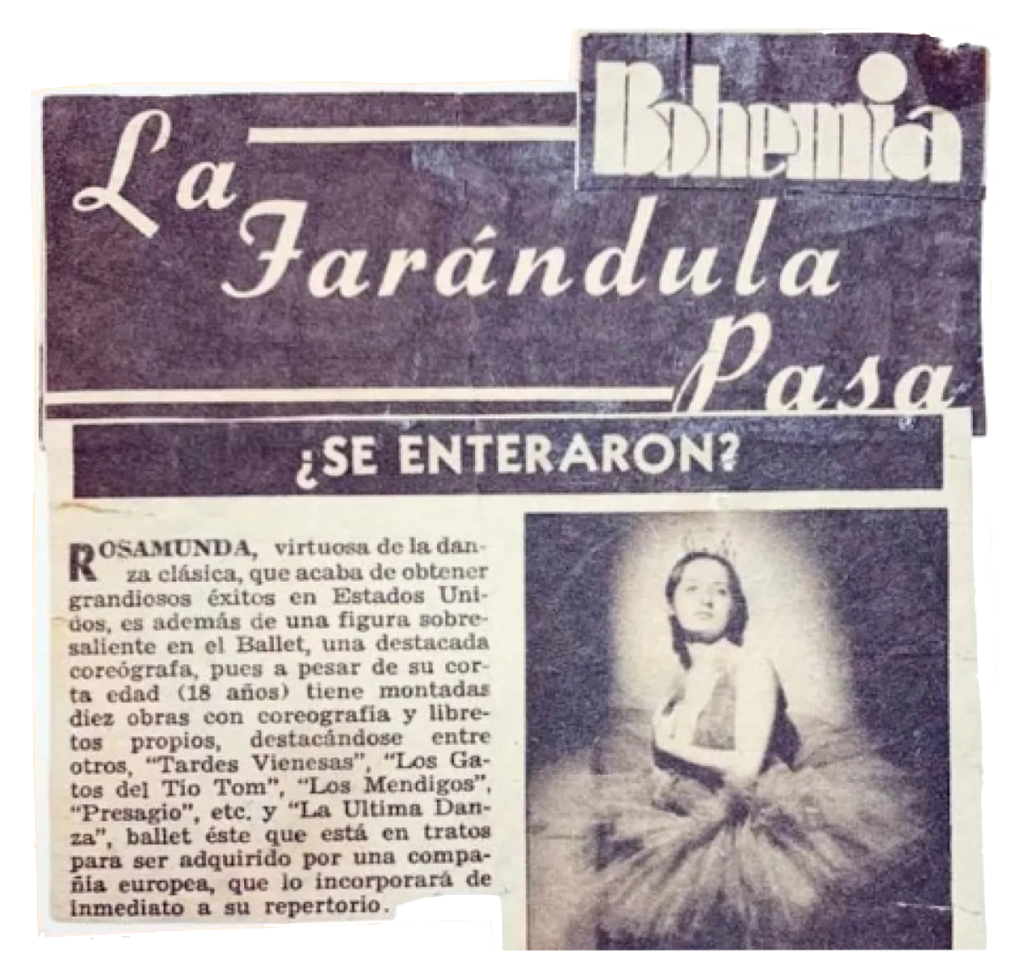
News-clipping. Marta Cinta González Saldaña’s files via Alastair Macaulay. Find at “Who was this mysterious ballerina from the viral Swan Lake video?” CBC.ca
Learn more about the mysterious life of Marta Cinta Gonzalez Saldana
If you’ve been here before, I’m sure you’ll have noticed my extended absence. While I’d like to have some exciting news or intriguing excuse for my lack of posting, the truth is just that life has been busy. It’s a lame excuse, I know, but any other alternative would be an outright lie. I had high hopes for returning to a regular posting schedule, until COVID. I am sure you’re sick of hearing about it. With my children home, on top of my previous obligations, there seemed to be less and less time. If you’re unsure why having your children at home can hinder your personal work, I suggest you read Virginia Wolf’s essay, “A Room of One’s Own.” If you’re a parent yourself, I’m sure you understand. I’d also like to tell you that COVID stressors pushed me to reflect and write more than ever before, but that too would be a lie.
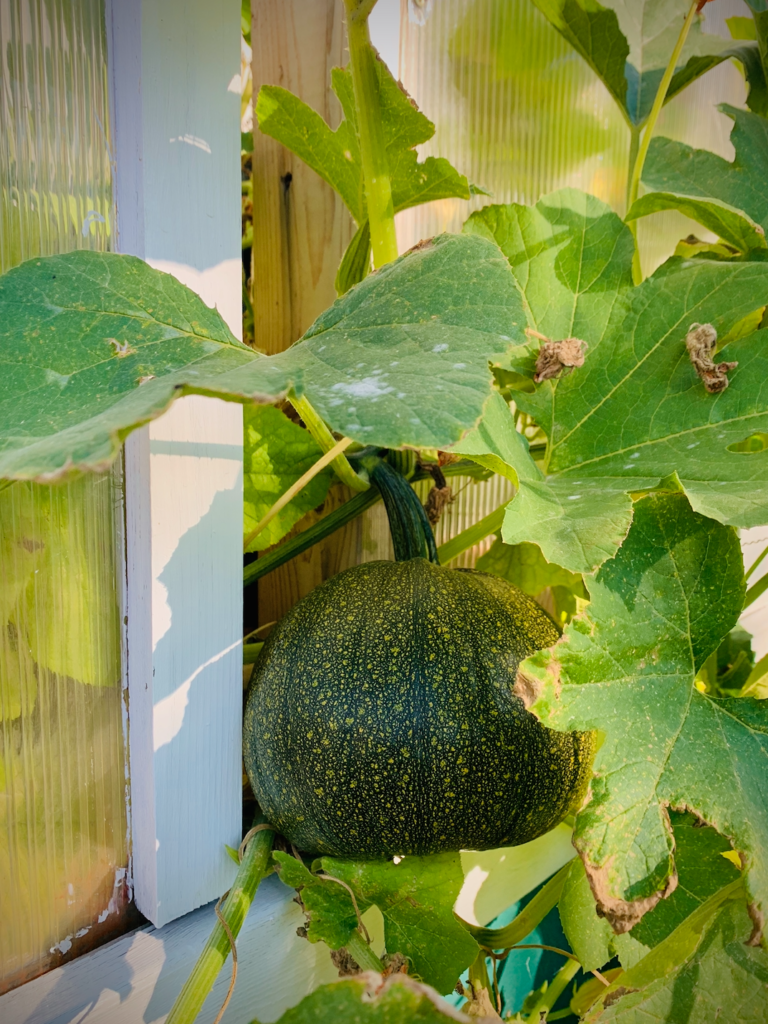
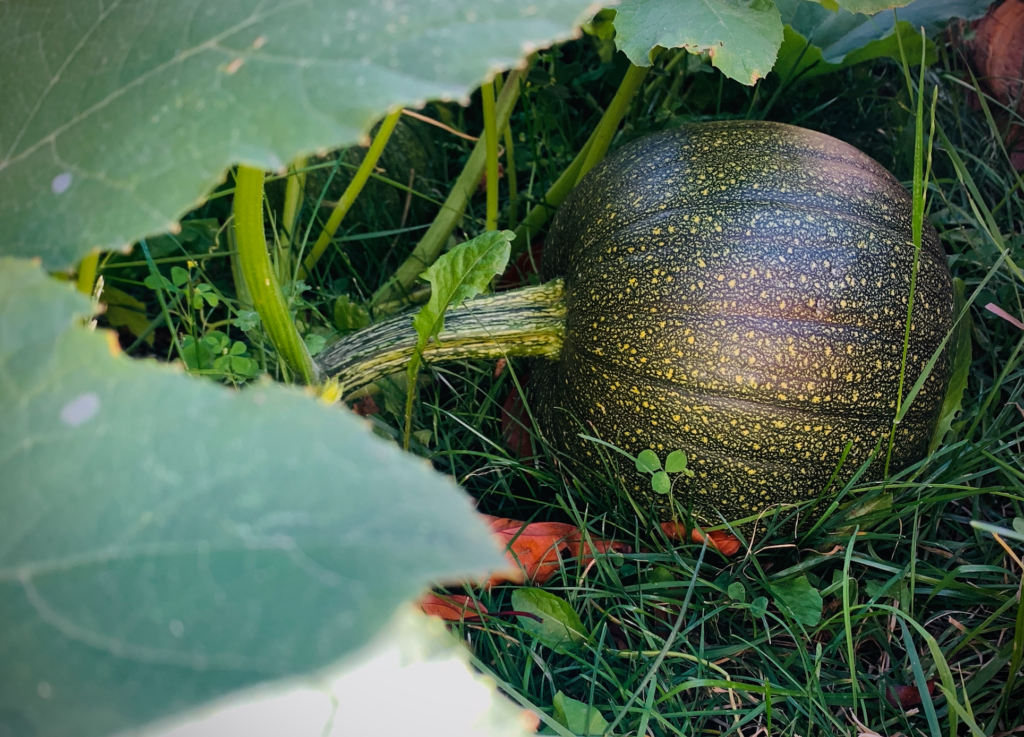
So, allow me to touch base. It’s been a year. Work is changing. I have some academic projects that I am working on finishing. I am also working on some exciting creative projects. This has been my first summer with a greenhouse, and it has been a learning experience. I made the mistake of planting sugar pumpkins inside the greenhouse – I now have four mature plants growing out of the windows and spilling into the yard.
The front yard is dedicated to an array of wildflowers, and some of the tallest sunflowers I’ve ever grown. At 9-10 feet, they are hitting my porch roof and setting off the front sensor every two minutes. I’ve been lucky enough to visit my family this summer and do some local travelling. Unsure of what the upcoming year will hold, I’ve done my best to keep this summer busy and exciting for my kids (safely, of course).
Soon these pumpkins will become a pie when autumn inevitably comes ‘round. Until then, stay safe and have a wonderful summer.
I have always had a slight fear of writing – that what I will have created in words may somehow come true, like a wish or a spell. Call it superstitious, call it unfounded, call it irrational, but this fear of mine was real.
Growing up, I noticed how often we were encouraged to conceptualize our goals, dreams, and fears into words;
We write down our goals, to help us achieve them. We write down our fears, to help us realize them. We write down our feelings, to help us navigate them. We write down our love, to help us share it. We write down our grief, to help us overcome it. We write down our dreams, to help us glimpse into our subconscious. We write down our memories, so we may never forget them. We write down our thoughts, so we may discover who we are and what we want. We write down our stories, so that they may never die. We are told to be careful of “what we wish for” when we speak harshly, and that we will get back in life what we choose to put into it.
Reader, can you fault me for being afraid of writing art and
weaving spells?
I believe Margaret Atwood’s “Spelling” illustrates the power of words and the immense importance of writing the truth – the truth of our fears and desires – no matter it’s “ugliness” or refusal to be lovely and quaint.
After all,
A word after a word after a word is power.
At the point where language falls away from the hot bones, at the point where the rock breaks open and darkness flows out of it like blood, at the melting point of granite when the bones know they are hollow & the word splits & doubles & speaks the truth & the body itself becomes a mouth.
Margaret Atwood
Please, read the rest of Atwood’s “Spelling.”
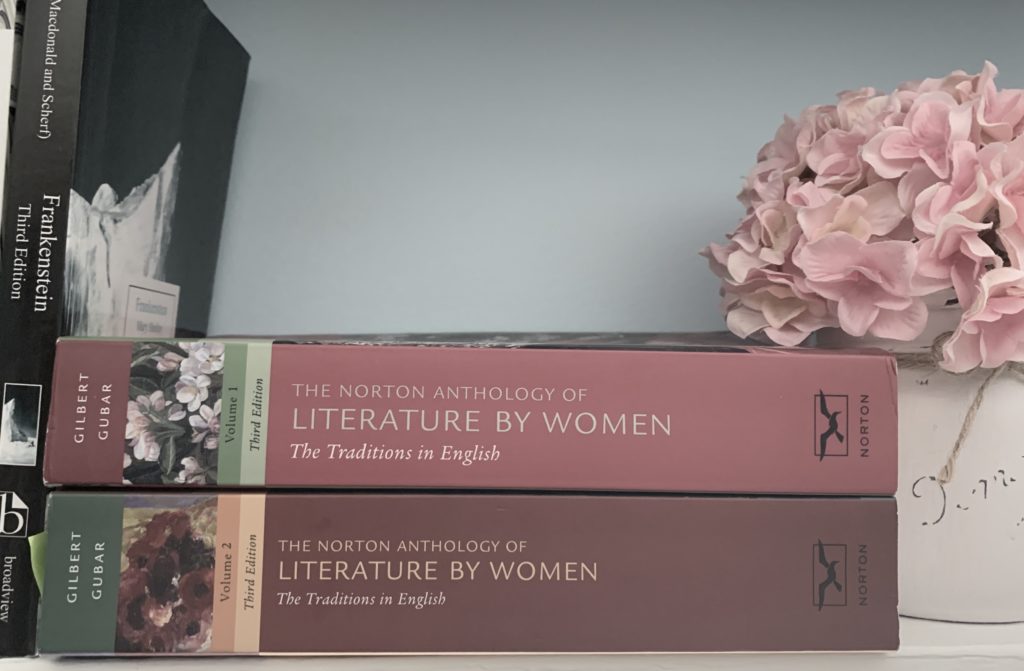
“Spelling,” and many other provoking works are collected in the Literature by Women anthropologies. I do not receive any sort of compensation for recommending the work; the volumes truly contain great writings.
She is born, that babe in arms, And I see in her myself; my love, my life. I see in her the ancestral child, And I realize that I am she, and she is me- My baby and I.
And I, her mother, The ancestral mother: Like my mother who bore me, And the mother who held she, I realize that I am my mother, and my mother is me.
.
.
I was moved to write “Ode to the Mother” when my maternal
grandmother became terminally ill. I watched my mother care for her and found
myself both moving ahead in time and falling back into my memories. Being third
in four successive generations of women, I could not help but feel my place in
the cyclical nature of time and family.
“Ode to the Mother” came from a place of love and a place of loss. After all, being a mother is a never-ending cycle of embracing new joys while we are forced to let go of others.
.
Below I have attached a link to a clip from the movie
Storks, “The Maternal Instinct.” It is a short and charming look at what I
refer to as the cyclical nature of motherhood.