Comics

For the Love of Comics

Alternatively, the mechanics of comics.

Comic books are truly a hybridization of pictorial storytelling and traditional fiction. That is, comics rely as much on their visual storytelling abilities as their narration and dialogue. In his book Understanding Comics, Scott McCloud defines comics as “juxtaposed pictorial and/or other images in deliberate sequence, intended to convey information and/or produce an aesthetic response in the viewer.” This tends to be a broad definition that can also include media like graphic novels and storyboards. While there is some controversy over the “definition” of a comic, I like to stick with the generalist stance that a visual/dialogue storybook made of panels constitutes a comic.

The comic book plays upon the language of words and pictures, forcing the reader to actively form meaning between the literary dialogue or narration and the visual cues. Hillary Chute, in her book Comics as Literature, defines comics “as a hybrid word-and-image form in which two narrative tracks, one verbal and one visual, register temporality spatially. . . . [A] reader of comics not only fills in the gaps between panels but also works with the often disjunctive back-and-forth of reading and looking for meaning.” This meaning is created through visual comic mechanics through the play of colour, text style, page style, panel size, shape, tempo, gutters…

The comic book is deceptively intricate, and when illustrated successfully, creates a deep and immersive world for the “reader” to find and create story meaning.
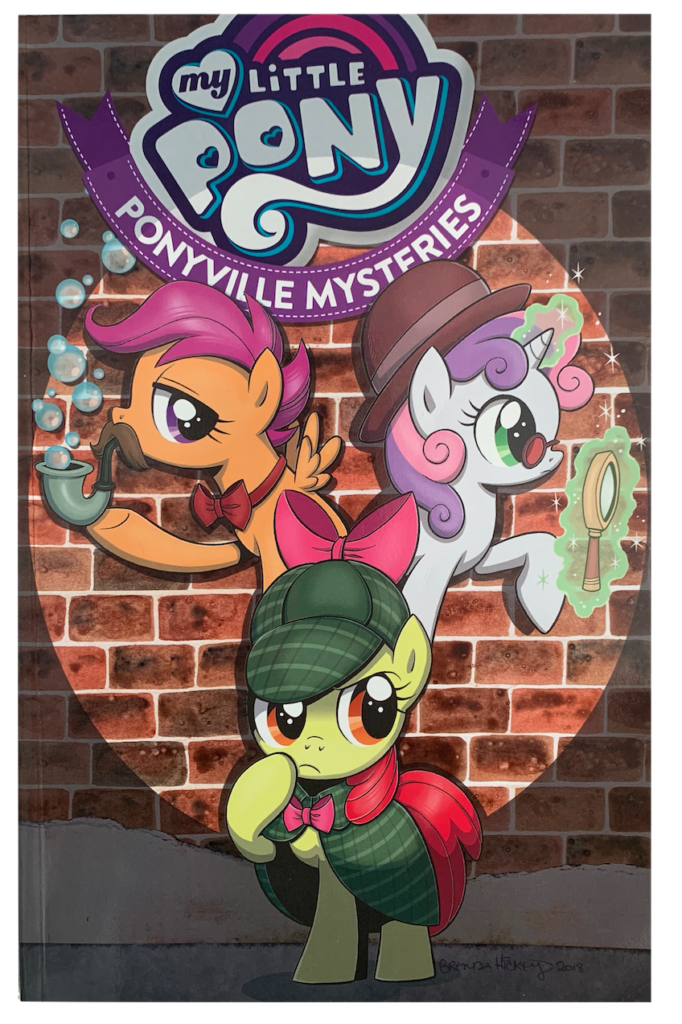
    My Little Pony: Ponyville Mysteries

    Written by Christina Rice.
    Artwork by Agnes Garbowska and others.


    Synopsis: The Cutie Mark Crusaders are on the case, solving crimes nopony else can! Will they be able to discover who’s behind the local mysteries, like the theft of supplies from Ponyville hospital or the ransacking of the bowling alley? Most importantly, can they crack the case and get their homework done at the same time?

    The My Little Pony comic books are simply charming. The stories mirror what you would find in the animated series: lessons in friendship and personal growth, with a little mischievousness and humour mixed in.

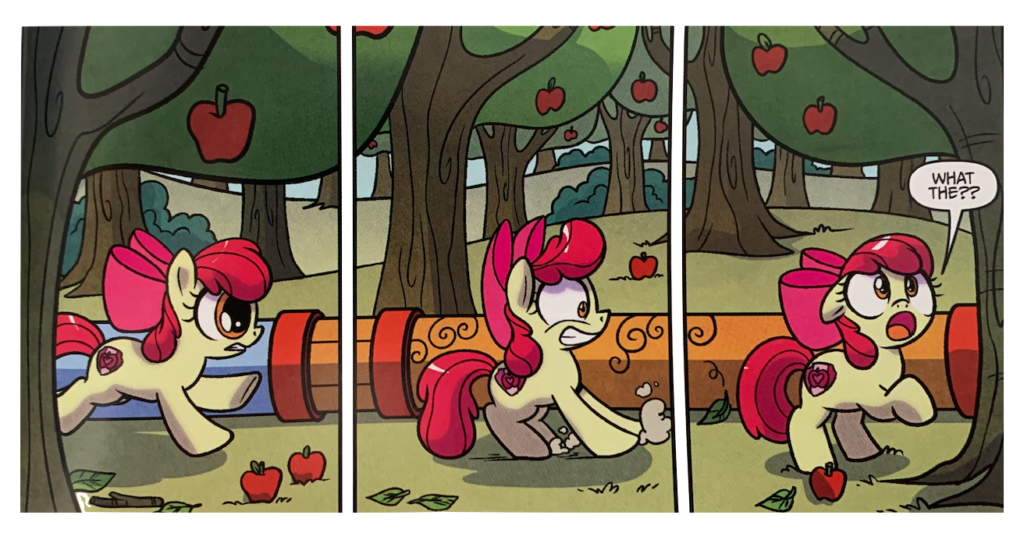
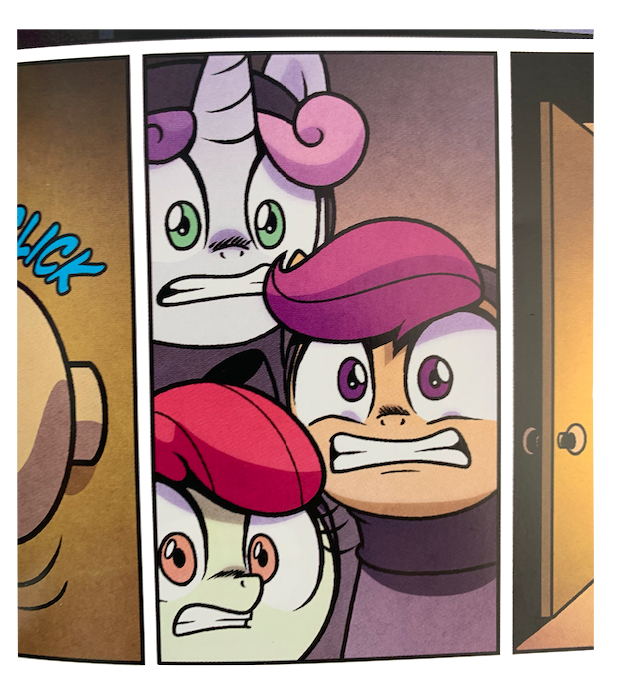
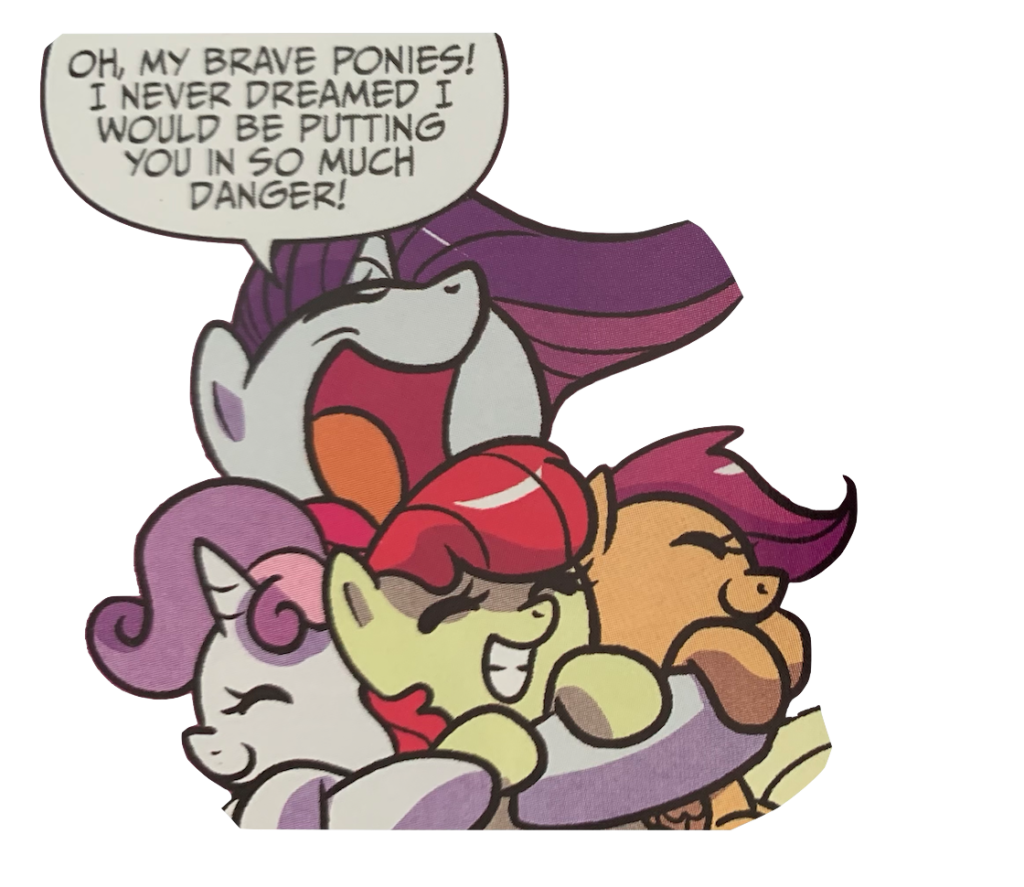
    The comic itself is vibrantly coloured and full of life. The layout, panels, and text styles are uncomplicated, which offers an age-appropriate reading experience for younger readers.

    Still, the colours and character designs work together excellently to create depth through the interesting and descriptive visuals.

    One of my favourite things about the comic book is the ability of the visuals to inform the dialogue, which is a great reading tool for younger readers.

    There was a point for my young reader when they found many of the levelled reading books for their age to be too easy (and sometimes too predictable!), while finding many of the child-audience novels to be too overwhelming.

    We found the comic book to be a great in-between – dialogue that was still challenging their reading skills, vibrant visual media that helped inform their reading comprehension, and stories that could keep their fragile interest!

    There are many different comics in The My Little Pony series – I can’t wait to read the next one!

    My Little Pony: Ponyville Mysteries

    Written by Christina Rice
    With art by Agnes Garbowska